
France
Millau
Feb
Millau, a commune nestled in the Aveyron department of the Occitanie region in southern France, presents a compelling case study of geographical significance, historical evolution, and modern engineering marvels.
Known for its diverse landscapes, rich cultural heritage, and the globally renowned Millau Viaduct, this town offers an intricate blend of natural beauty and human ingenuity. This guide aims to provide an in-depth exploration suitable for students pursuing advanced studies in geography, history, architecture, and cultural studies.
What to know about Millau
The Millau Viaduct – An Engineering Feat
The Tallest Bridge in the World
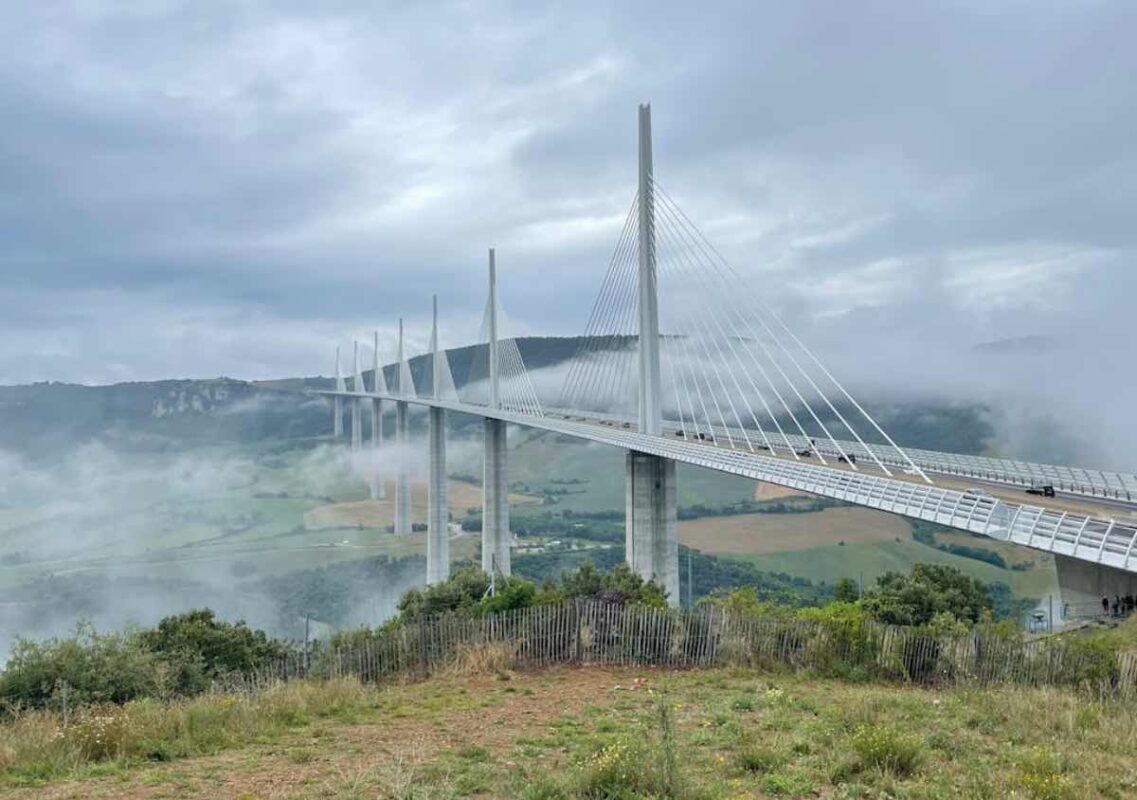
The Millau Viaduct stands as the tallest bridge globally, reaching a structural height of 343 meters (1,125 feet). Designed by structural engineer Michel Virlogeux and architect Sir Norman Foster, the bridge is an exemplary model of modern civil engineering. It spans the Tarn Valley, harmonizing with the natural topography while providing vital infrastructural connectivity.
Structural and Engineering Insights
Constructed between 2001 and 2004, the viaduct addresses traffic congestion issues along the Paris-Mediterranean route. Its cable-stayed design features multiple pylons and a streamlined deck, showcasing advancements in materials science, aerodynamics, and load distribution. The integration of aesthetic design with functional engineering reflects contemporary trends in sustainable infrastructure development.
Geographical Context and Environmental Factors
The Confluence of Tarn and Dourbie Rivers
Millau’s geographic location at the junction of the Tarn and Dourbie Rivers has historically influenced its settlement patterns and economic activities. The town is a gateway to the Grands Causses Regional Natural Park, characterized by karst landscapes, limestone plateaus, and biodiverse ecosystems.
Climatic Conditions and Environmental Impact
Millau experiences a hybrid climate influenced by oceanic, Mediterranean, and continental systems. This climatic diversity supports varied biomes, contributing to the region’s ecological richness. Understanding Millau’s climate is essential for studies in environmental science and sustainable tourism development.
Historical Evolution of Millau
Origins and Antiquity
Tracing its origins back nearly 3,000 years, Millau was initially known as Condatomagus during the Gallic period. Its strategic location facilitated trade and cultural exchanges in ancient times. Archaeological findings from this era provide valuable insights into early urbanization and socio-economic structures.
Medieval Development
During the Middle Ages, Millau evolved into a prominent trade hub, fostering artisanal crafts and commercial activities. Architectural remnants from this period, including fortifications and civic buildings, offer a tangible connection to feudal Europe’s socio-political landscape.
The Legacy of the Leather and Glove Industry
Economic Significance of Leathercraft
Historically dubbed the “capital of leather and gloves,” Millau’s economy thrived on its high-quality sheepskin glovesproduction. The industry exemplifies the intersection of traditional craftsmanship and industrial evolution.
Contemporary Artisanal Practices
Although industrial demands have shifted, Millau retains artisanal workshops where traditional glove-making techniques are preserved. These practices are critical for studies in cultural heritage management and sustainable economic development.
Geomorphological and Natural Attractions
The Gorges du Tarn
The Gorges du Tarn exemplify fluvial geomorphology, with towering cliffs, meandering rivers, and lush vegetation. This natural wonder is a field laboratory for geologists and environmental scientists studying erosion, sediment transport, and karst formations.
The Grands Causses
The Grands Causses plateau, a UNESCO World Heritage site, features extensive limestone formations and unique karst landscapes. This region is vital for ecological and geological research, offering insights into biodiversity conservation and land-use management.
Gastronomy and Agricultural Practices
Roquefort Cheese: A Culinary Heritage
Millau’s proximity to Roquefort-sur-Soulzon links it to the production of the renowned Roquefort cheese, made from raw sheep’s milk and aged in natural caves. This cheese is not only a gastronomic delight but also a subject of interest in agricultural studies, focusing on traditional food preservation and microbial ecosystems.
Agricultural Markets and Seasonal Fairs
Millau hosts vibrant markets and seasonal fairs, promoting local agricultural produce and artisanal crafts. These events provide case studies for students examining rural economies, agritourism, and local food systems.
Architectural Heritage and Historical Sites
La Graufesenque: A Roman Legacy
The archaeological site of La Graufesenque reveals Millau’s Roman history as a significant pottery production center. Excavations here offer insights into ancient manufacturing techniques, trade networks, and urban planning.
Ecclesiastical Architecture: Notre-Dame de l’Espinasse
The Notre-Dame de l’Espinasse church, an exemplar of Romanesque architecture, features intricate carvings and stained glass. Its architectural evolution reflects broader trends in medieval religious and civic structures.
The Belfry of Millau
The Belfry of Millau, a civic monument, symbolizes medieval urban governance and defense mechanisms. Climbing the belfry provides a panoramic perspective essential for spatial analysis and urban studies.
Renaissance Influence: Sambucy Castle
The Sambucy Castle, with its Renaissance architecture and landscaped gardens, illustrates the adaptation of classical aesthetics in regional French architecture. It serves as a case study for art historians and conservationists.
Outdoor Recreational Activities and Ecotourism
Paragliding: Harnessing Aerodynamics
Millau is a premier destination for paragliding, leveraging its favorable wind conditions and topography. The sport offers practical applications in studies of aerodynamics, meteorology, and sustainable tourism.
Hiking, Climbing, and Environmental Stewardship
Millau’s diverse terrain supports hiking, rock climbing, and mountain biking, activities integral to outdoor recreation and environmental education programs. These activities highlight the balance between human activity and ecological preservation.
Cultural Dynamics and International Relations
Festivals and Cultural Expressions
Millau’s rich cultural calendar includes music festivals, art exhibitions, and historical reenactments. These events provide fertile ground for anthropological and sociological research into community identity and cultural continuity.
Twin Cities and Global Exchange
Millau maintains twin city partnerships with municipalities across Europe and Africa, fostering cultural diplomacy and international cooperation. These relationships are pertinent to studies in global governance and transnational cultural networks.
More to know about Millau
Accessibility and Infrastructure
The Millau Viaduct and the A75 highway enhance regional accessibility, complemented by the Millau-Larzac airfield. These infrastructural elements are critical for logistics in academic field studies and research expeditions.
Accommodation and Research Facilities
Millau offers a range of accommodation options, from traditional inns to modern hotels, suitable for academic groups. The town’s proximity to natural and historical sites makes it an ideal base for multidisciplinary fieldwork.
Millau embodies a confluence of historical depth, geographical diversity, and modern innovation. In this quite we tried to outline some key aspects relevant to those who want to know more about Millau, encouraging further exploration of the area. Whether through the lens of history, geography, architecture, or environmental science, Millau offers a rich tapestry of knowledge awaiting discovery.
