
Iceland
Vestmannaeyjabær
Aug
Where is Vestmannaeyjar ?
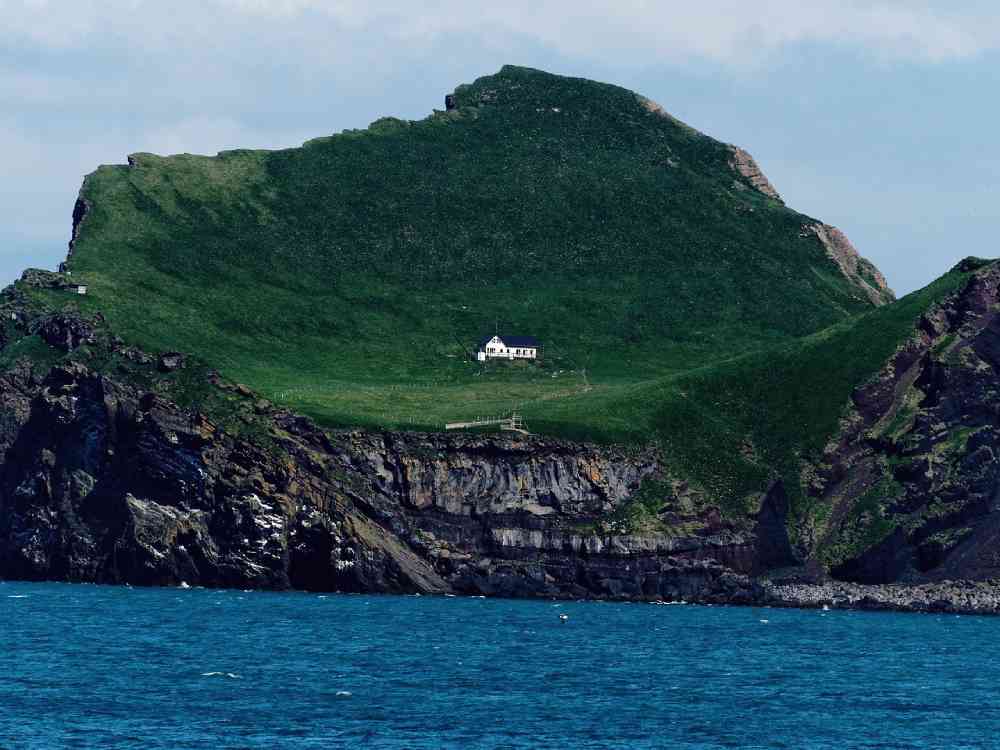
Vestmannaeyjar, often referred to as the Westman Islands, is a municipality and group of islands located off the southern coast of Iceland. The archipelago’s largest island, Heimaey, is home to the main town, Vestmannaeyjabær, where most of the population of 4,414 resides. The other islands in the archipelago are uninhabited, though six of them have small hunting cabins.
Vestmannaeyjar gained international recognition in 1973 due to the eruption of the Eldfell volcano. This natural disaster led to the destruction of numerous buildings and necessitated the evacuation of the entire population to mainland Iceland for a month. About one-fifth of the town was lost to the lava flow, which was eventually halted by the strategic application of 6.8 billion liters of cold seawater.
Vestmannaeyjar Geography
The Vestmannaeyjar archipelago is relatively young in geological terms, situated within the Southern Icelandic Volcanic Zone. The islands have formed through volcanic eruptions over the past 10,000 to 12,000 years, with the volcanic system comprising around 70 to 80 volcanoes, both above and below sea level.
Vestmannaeyjar consists of several islands, including:
- Heimaey (13.4 square kilometers; 5.2 sq mi)
- Surtsey (1.4 square kilometers; 0.54 sq mi)
- Elliðaey (0.45 square kilometers; 0.17 sq mi)
- Bjarnarey (0.32 square kilometers; 0.12 sq mi)
- Álsey (0.25 square kilometers; 0.097 sq mi)
- Suðurey (0.20 square kilometers; 0.077 sq mi)
- Brandur (0.1 square kilometers; 0.039 sq mi)
- Hellisey (0.1 square kilometers; 0.039 sq mi)
- Súlnasker (0.03 square kilometers; 7 acres)
- Geldungur (0.02 square kilometers; 5 acres)
- Geirfuglasker (0.02 square kilometers; 5 acres)
Additionally, smaller islands like Hani, Hæna, Hrauney, and the skerry Grasleysa, collectively known as Smáeyjar (meaning “small islands”), are part of the archipelago. In total, Vestmannaeyjar covers 16.3 square kilometers (6.3 sq mi) and includes 18 islands along with approximately 30 rock stacks and skerries.
These islands were all created by submarine eruptions, consisting of alternating layers of palagonite tuff and lava. The oldest geological formations are found in the northern part of Heimaey, the largest and only inhabited island. The landscape features striking basalt columns and picturesque coves and grottos, sculpted by the sea’s erosion of the soft rock along the shore.
Significant volcanic activity has shaped the archipelago’s history. A submarine eruption occurred southeast of Hellisey in 1896, followed by a major eruption beginning on November 14, 1963. This eruption, lasting nearly four years, was one of the longest in Icelandic history and led to the formation of Surtsey, the archipelago’s 15th island. The 1973 eruption, which lasted 155 days, caused Heimaey to expand by about 2.1 square kilometers (0.81 sq mi).
The Vestmannaeyjar group stretches approximately 38 kilometers (24 miles) in length and 29 kilometers (18 miles) in width, with its closest point lying about 8 kilometers (5 miles) from mainland Iceland.
Vestmannaeyjar Plants & Animals
Vestmannaeyjar experiences a unique microclimate with minimal snowfall but frequent rainfall. This climate makes the islands a key stopover for migratory birds, which are often first spotted here in the spring and depart from the islands in the autumn.
Vestmannaeyjar is home to all of Iceland’s seabird species, including guillemots, gannets, kittiwakes, Iceland gulls, and, most notably, puffins.
The puffin, the most abundant species, is the emblem of Vestmannaeyjar. Over 30 bird species nest in the cliffs and grassy ledges, with millions of birds making their home on the islands, while other species appear irregularly.
The islands’ flora includes approximately 150 plant species, and around 80 types of insects have been identified. The waters surrounding Vestmannaeyjar are among the richest fishing grounds in the North Atlantic. The two primary commercial species in Iceland, cod and haddock, are particularly abundant here.
Other species, such as flatfish, herring, and capelin, are commonly caught during their autumn and winter migrations. Lobsters and ocean perch thrive in the deep waters southeast of the islands. Additionally, seals, small whale species, and various other marine life are found in large numbers around the archipelago.
The residents of Vestmannaeyjar have a longstanding tradition of helping stray puffins, guiding them to safe locations.
Vestmannaeyjar Climate
Vestmannaeyjar experiences a subpolar oceanic climate (Cfc) according to the Köppen climate classification, characterized by extremely high precipitation for its latitude.
The islands are frequently very windy, with the highest wind speed ever recorded in Iceland—61 meters per second (140 mph; 220 km/h)—measured at Stórhöfði, the southernmost of the island’s two major peninsulas. The predominant wind directions are from the east and southeast.
Despite its location, Vestmannaeyjar benefits from the warming influence of the Gulf Stream, resulting in the highest average annual temperature in Iceland, particularly noticeable during the winter months.
Vestmannaeyjar History
The name Vestmannaeyjar, meaning “Islands of the Westmen,” originates from the Gaels who were captured and enslaved by Norsemen. The Old Norse term “Vestmenn” referred to the Celts of Britain and Ireland, and it persisted in Icelandic even though Iceland is located further west. In contrast, the Norse Gaels referred to themselves as “Ostmen” or “Austmenn,” meaning “East-men.”
Shortly after Ingólfr Arnarson, the first Norse settler of Iceland, arrived, his blood brother Hjörleifr Hróðmarsson was killed by the slaves he had brought with him. Ingólfr tracked the fleeing slaves to the Vestmannaeyjar, where he killed them in retribution, thus giving the islands their name. This event is believed to have occurred around AD 875.
On July 16, 1627, Vestmannaeyjar was the site of a tragic event known as the Turkish Abductions. A fleet of three ships, commanded by Barbary pirates from Algiers and under Ottoman control, captured the islands and remained there until July 19. Prior to this, the pirates had raided the east of Iceland, and another raid was conducted in Grindavík in June of that year by Murat Reis from Salé, Morocco. The pirates abducted 234 people from Vestmannaeyjar and transported them on a 27-day journey to Algiers, where most lived out their lives in slavery.
One of the captives, Lutheran minister Ólafur Egilsson, managed to return to Iceland in 1628 and later wrote a book detailing his experience. In 1636, a ransom was paid for 34 of the captives, allowing them to return to Iceland. Following this event, a small fort was built on Skansinn, and an armed guard was stationed on the mountain Helgafell to watch for approaching ships.
For centuries, the inhabitants of Vestmannaeyjar faced a difficult struggle for survival, relying on fishing, wild birds, and their eggs, which they collected from the cliffs and offshore rock stacks. Significant changes came at the end of the 19th century when the population was around 600.
In 1904, the first motorized boat was purchased, leading to a rapid increase in such boats, and by 1930, the population had grown to 3,470. Vestmannaeyjar became a leader in fishing and seafood processing, establishing itself as the most productive fishing center in Iceland. Freshwater shortages were a persistent problem, but this was greatly alleviated in 1968 with the installation of a pipeline.
Vestmannaeyjar, like much of Iceland, is volcanically active. The 20th century saw two major eruptions: the creation of the new island of Surtsey in 1963 and the Eldfell eruption in January 1973, which formed a 200-meter-high mountain where a meadow had once been and led to the temporary evacuation of the island’s 5,000 residents to the mainland.
In 2000, the Heimaey stave church was erected at Skansinn as a gift from the Norwegian government to Iceland, commemorating the thousandth anniversary of Iceland’s conversion to Christianity. The church is a replica of the Haltdalen Stave Church and includes a replica of the St. Olav frontal.
Vestmannaeyjar Transportation
A ferry service connects Vestmannaeyjar to the mainland, with routes from Landeyjahöfn (the closer port) and, in poor weather conditions, from Þorlákshöfn (which is farther away).
The Landeyjahöfn harbor, opened in 2010, significantly reduced the sailing time to approximately 40 minutes. In July 2019, a new hybrid electric ferry began operating the 13-kilometer route. This ferry, equipped with a 3 MWh battery, can carry 550 passengers and 75 cars, consuming 100 MWh per week and replacing 35 tonnes of fuel. However, during bad weather, the ferry must take the longer route to Þorlákshöfn, which requires traditional fuel.
Vestmannaeyjar Airport used to have regular flights to Reykjavík, but as of 2023, there are no scheduled flights. Icelandair has operated charter flights to the airport for the Þjóðhátið festival in 2022 and 2023.
Vestmannaeyjar Culture
Festivals in Vestmannaeyjar
Vestmannaeyjar is renowned in Iceland for its major annual festival, Þjóðhátíð (“The National Festival”), which draws thousands of visitors each year. The festival originated in 1874, coinciding with the millennium celebration of Iceland’s settlement. Due to bad weather, Vestmannaeyjar residents were unable to sail to the mainland for the national festivities, so they held their own celebration locally, a tradition that has continued ever since.
Films of Vestmannaeyjar
From 1998 to 2003, Heimaey island in Vestmannaeyjar was home to Keiko, the famous killer whale who starred in the 1993 movie Free Willy. The island also served as the setting for the 2012 film The Deep, which is based on true events that took place around the island.
Literature of Vestmannaeyjar
Vestmannaeyjar’s history and volcanic activity play significant roles in various literary works. The islands are prominently featured in James Rollins’ seventh Sigma Force novel, The Devil Colony (2011). Additionally, Yrsa Sigurðardóttir’s novel Ashes to Dust uses the 1973 eruption of Eldfell as a key plot element, with the islands serving as the primary setting.
Sports in Vestmannaeyjar
The sports club ÍBV, based in Vestmannaeyjar, is one of Iceland’s most prominent, having won multiple national championships and cups in both handball and football.
The Westman Islands Golf Club, established in 1938, is located within the remnants of an extinct volcano. It has gained recognition, being ranked by Golf Monthly as one of the top 200 golf courses in Europe.
Important people from Vestmannaeyjar
Ásgeir Sigurvinsson (born 1955) is a retired footballer who was born in Vestmannaeyjar and began his career at ÍBV.
Bergur Elías Ágústsson (born 1963) served as the mayor of Norðurþing and was born in Vestmannaeyjar.
Elísa Viðarsdóttir (born 1991) was born in Vestmannaeyjar and started her football career at ÍBV.
Elsa Guðbjörg Vilmundardóttir (1932–2008) was Iceland’s first female geologist and was born in Vestmannaeyjar.
Fanndís Friðriksdóttir (born 1990) is a footballer from Vestmannaeyjar, who trained in ÍBV’s youth program.
Gísli Pálsson (born 1949), a professor of anthropology, was born in Vestmannaeyjar.
Guðmundur Guðmundsson (1825–83) was one of the first Mormon missionaries to preach in Iceland, delivering sermons in Vestmannaeyjar.
Guðmundur Torfason (born 1961) is a retired footballer born in Vestmannaeyjar.
Gunnar Heiðar Þorvaldsson (born 1982) is a footballer from Vestmannaeyjar who has been signed to ÍBV on three occasions.
Halldóra Briem (1913–1993), the first Icelandic woman to study architecture, was born in Vestmannaeyjar.
Heimir Hallgrímsson (born 1967) is the former manager of the Iceland national football team. Born in Vestmannaeyjar, he has both played for and managed ÍBV teams multiple times and continues to serve as the town’s dentist.
Helgi Ólafsson (born 1956) is a chess grandmaster who hails from Heimaey.
Hermann Hreiðarsson (born 1974) is a footballer who has served as both player and player-manager at ÍBV.
Högna Sigurðardóttir (1929–2017), an architect, was born in Vestmannaeyjar.
Ívar Ingimarsson (born 1977) is a footballer and cousin of Gunnar Heiðar Þorvaldsson, who played for ÍBV in 1998–99.
Júlíana Sveinsdóttir (1889–1966) was a painter and textile artist born in Vestmannaeyjar.
Kári Kristjánsson (born 1984) is a handball player from Vestmannaeyjar.
Kolfinna Kristófersdóttir, a model, is originally from Vestmannaeyjar.
Marcellus de Niveriis OFM (died 1460 or 1462) was the bishop of Skálholt and master of the manor of Vestmannaeyjar.
Margrét Lára Viðarsdóttir (born 1986) is a retired footballer regarded by many as Iceland’s best female footballer of all time. She played for ÍBV, Valur, and also had stints in Sweden and Germany, scoring 79 goals in 124 games for Iceland. She was named Icelandic athlete of the year in 2007.
Ólafur Egilsson (1564–1639) was a Lutheran minister who, along with his wife and sons, was kidnapped in the Turkish Abduction of 1627. He later wrote a memoir about his experiences.
Sigurvin Ólafsson (born 1976) is a footballer born in Vestmannaeyjar who has been signed to ÍBV twice.
Smári McCarthy (born 1984) is an information activist and former Icelandic Pirate Party MP who grew up in Vestmannaeyjar after his family moved there when he was 9.
Sólveig Anspach (1960–2015) was a film director and screenwriter born in Vestmannaeyjar.
Tryggvi Guðmundsson (born 1974) is a footballer who was born in Vestmannaeyjar and started his career at ÍBV, returning there twice.
Þórarinn Ingi Valdimarsson (born 1990) is a footballer born in Vestmannaeyjar who began his career at ÍBV.
Þorsteinn Ingi Sigfússon (1954–2019) was an award-winning physicist born in Vestmannaeyjar.
Have you even been in Vestmannaeyjar ? Let us know in the comments bellow.
